
Is a Chimney Liner Necessary?
A chimney liner is necessary when your appliance requires one or the existing flue is missing, damaged, incorrectly sized, or unsuitable for that appliance. An inspection of the appliance and chimney helps determine whether to repair, replace, or leave the liner in place.
Need help now? (443) 596-9310
When Is a Chimney Liner Necessary for Your Fireplace?
A liner is needed when the appliance instructions, chimney condition, or inspection findings call for a properly sized, continuous passage for exhaust. It protects the chimney structure from heat and combustion byproducts while helping direct exhaust outdoors. The exact requirement depends on the appliance and the existing flue; a liner is not automatically necessary in every chimney.
A missing, cracked, deteriorated, or poorly fitted liner can change how the chimney handles heat and exhaust. A change from one appliance to another can also make an existing liner unsuitable, even if it appears intact. A chimney inspection checks the flue and the connected appliance before anyone recommends installation.
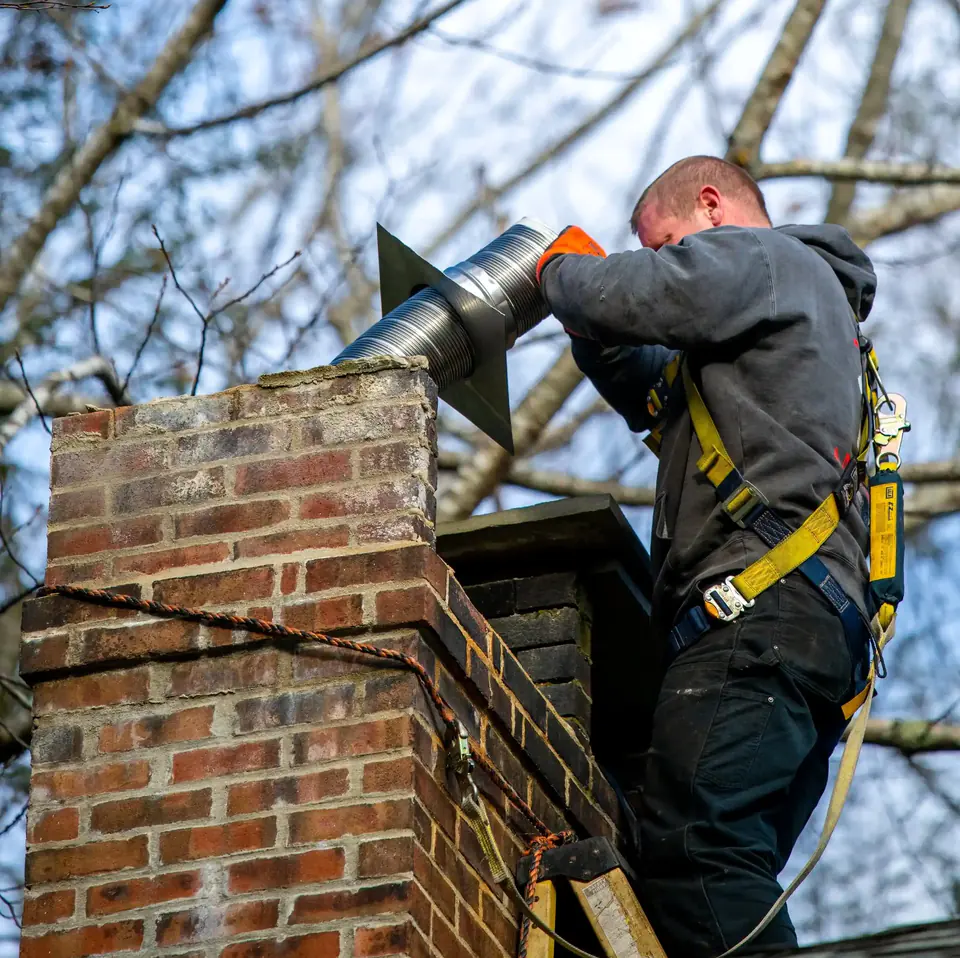
For a liner project, we can inspect the system and provide chimney liner installation service. The inspection establishes whether the best next step is a new liner, repair, or no liner work.
Which Chimney Liner Warning Signs Call for an Inspection?
These signs do not prove that the liner has failed, but they are reasons to stop guessing and have the flue checked. Do not climb onto the roof or reach into the chimney to investigate.
- Visible cracks or missing sections — Cracks, gaps, or pieces of liner material visible from the firebox can point to damage farther up the flue. Avoid using the fireplace until a chimney professional evaluates it.
- Debris in the firebox — Tile fragments or other masonry pieces may have fallen from the flue. Note what you see and arrange an inspection rather than trying to clear material from inside the chimney.
- A new or changed appliance — A replacement fireplace or heating appliance may have different venting requirements from the previous one. Have the chimney and liner assessed before using the new equipment.
- Smoke or unusual exhaust behavior — Smoke entering the room or exhaust behaving differently deserves prompt attention. Several chimney or appliance problems can cause this, so a symptom alone cannot identify the liner as the cause.
- A fire, relining project, or significant weather event — These events can change the condition of the flue, including damage that is not visible from the room. The CSIA’s Level 2 inspection guidance identifies relining and certain events as reasons for a more detailed inspection, including a video scan.
Should You Keep, Repair, or Replace the Existing Chimney Liner?
The right option depends on the liner’s condition and whether it suits the connected appliance. These choices are not interchangeable: an inspection should establish what the flue needs before work begins.
Keep the existing liner
This may fit when inspection shows the liner is intact and appropriate for the appliance. The check should account for its condition and fit, not just whether a liner is present.
Repair the liner
Repair may be appropriate when the damage is limited and the rest of the system remains suitable. A professional needs to identify the damage and confirm that a repair addresses the full problem.
Install a new liner
Replacement may be the answer when the existing liner is missing, badly deteriorated, or unsuitable for the appliance. The liner must be selected and fitted for the specific chimney and appliance.
Inspect before changing anything
When the condition or appliance requirements are unclear, inspection comes first. It keeps you from paying for a liner that does not address the actual chimney issue.
Need help now? (443) 596-9310
Can You Put a Liner in an Old Chimney?
Often, an old chimney can be relined, but age alone does not determine whether installation will work. The chimney’s dimensions, condition, route, and intended appliance all affect the choice. A professional must check whether the flue can accept a liner and whether any underlying masonry damage needs attention first.
A liner does not automatically repair loose brick, a failing crown, or other structural defects. Those issues can require separate chimney work before or alongside relining. For more detail on this specific situation, read whether you can install a liner in an old chimney.
What Happens Before a Chimney Liner Is Installed?
A sound decision starts with the appliance and flue, then moves to liner selection and a final check. These steps show what to expect from the assessment and installation process; they are not instructions for a homeowner to work inside the chimney.
- Identify the connected appliance — Tell the chimney professional what appliance uses the flue and whether it has changed. The appliance type and its venting requirements guide the liner assessment.
- Describe the concern and any recent changes — Mention smoke problems, visible debris, a prior chimney fire, weather damage, or a recent appliance replacement. These details help focus the inspection on relevant parts of the system.
- Inspect the fireplace and chimney — The professional examines accessible areas and checks the flue for condition and suitability. Ask what the inspection found before agreeing to a repair or replacement.
- Use a video scan when the inspection calls for it — A chimney camera can show the interior of the flue where a direct view is not enough. Check that the findings identify the location and nature of any damage.
- Choose a liner that fits the system — The liner type and size need to match the appliance and chimney. Confirm that the proposed work addresses the inspection findings rather than only the visible symptom.
- Prepare the chimney for the work — The installer determines whether cleaning, repairs, or other preparation is needed before placing the liner. Confirm which parts of the chimney are included in the planned scope.
- Install and connect the liner — The liner is fitted through the flue and connected to the appliance as required by the system. Ask the installer to check that the route, connections, and termination are complete.
- Review the completed work — Before using the fireplace, confirm that the work has been checked and that you understand any use or maintenance instructions for the appliance. Keep the inspection and installation details with your home records.
What Can Go Wrong If the Liner Is Wrong or Damaged?
A damaged or unsuitable liner can leave the chimney exposed to heat and exhaust it was not meant to handle. A liner that does not fit the appliance can also fail to address venting problems. The visible symptom may come from another part of the chimney, so replacing the liner without checking the whole route can miss the cause.
Do not light a fire when you see broken liner material, suspect damage, or notice smoke entering the home. Arrange a chimney inspection before using the appliance again. For sweeping and related checks, see our chimney sweep in Annapolis page.
Need help now? (443) 596-9310
What Should You Have Ready Before Booking a Liner Inspection?
A few details help the inspection focus on your actual system. You do not need to diagnose the liner yourself or inspect the roof.
- Appliance details — Share whether the fireplace or heating appliance burns wood, gas, or another fuel, along with its make and model if you know them. Do not guess at the model if you cannot find it.
- Recent changes — Note any appliance replacement, chimney fire, storm damage, or recent repair. A change to the system can affect whether the existing liner remains suitable.
- What you have observed — Describe visible cracks, falling debris, smoke spillage, or changes in operation. A clear description helps distinguish a liner concern from another chimney or appliance issue.
- Inspection records — Gather any prior inspection or repair notes if available. These can show what was checked before and help the professional compare the current condition.
How Do You Arrange Chimney Liner Service?
Book an inspection for your home so the chimney and connected appliance can be assessed before liner work is selected. The assessment visit focuses on the system’s condition and the reason for the concern; installation is a separate scope of work when findings show it is needed.
Call (443) 596-9310 or use our contact page to arrange service. For a cost overview before booking, see how much chimney liner installation costs.
Frequently asked questions
Does every fireplace need a chimney liner?
No. The need depends on the appliance, the chimney, and the condition and suitability of any existing liner. An inspection can determine whether to keep, repair, or replace it.
Can you put a liner in an old chimney?
An old chimney may be relined if its dimensions and condition allow for a suitable installation. The chimney should be inspected first, because masonry problems may need attention as part of the project.
Can I use my fireplace if I think the liner is damaged?
Do not use the fireplace when you see broken liner material or suspect flue damage. Arrange an inspection so a chimney professional can check the system before it is used again.
Does changing my fireplace mean I need a new liner?
Not always, but a different appliance can have different venting requirements. Have the chimney and existing liner assessed for the new appliance before operating it.
Get Your Chimney Liner Checked
Call (443) 596-9310 to arrange an inspection and find out what your chimney needs.